Categories
Customer Support Finance & Business

Emergency Response Management: 24/7 Customer Support Available

In today’s fast-paced and unpredictable business landscape, it is essential for organisations to prepare thoroughly for unexpected challenges that can disrupt operations, particularly in the domain of customer support. Emergencies can arise without warning from various sources, including natural disasters, cyber attacks, or global pandemics. Therefore, developing a robust emergency response management plan is imperative to ensure operational continuity and maintain outstanding customer support, even during challenging times.

Harnessing Emergency Response Management to Strengthen Business Resilience

Emergency response management encompasses a systematic approach to identifying potential risks, creating strategies to mitigate these risks, and executing effective responses when emergencies arise. In the context of customer support, this requires meticulous planning and resource allocation to guarantee that service delivery remains uninterrupted and customer satisfaction is preserved even amid crises.

Implementing a solid emergency response management system is essential for several compelling reasons:

  1. Preserving Customer Trust: During crises, customers often face heightened anxiety and uncertainty. By demonstrating preparedness and an effective response strategy, businesses can instil confidence in their customers, reinforcing their trust and loyalty.
  2. Minimising Downtime: Interruptions in customer support can lead to severe consequences, including lost sales, diminished customer loyalty, and a tarnished reputation. A robust emergency response plan helps minimise downtime, ensuring that customer inquiries and concerns are addressed promptly and efficiently.
  3. Prioritising Employee Safety and Well-being: A well-structured emergency response management plan prioritises the safety and welfare of customer support staff. By providing clear guidelines and protocols, businesses can ensure that employees are well-equipped to handle emergencies while safeguarding their own well-being.

Essential Elements of a Successful Emergency Response Management Plan
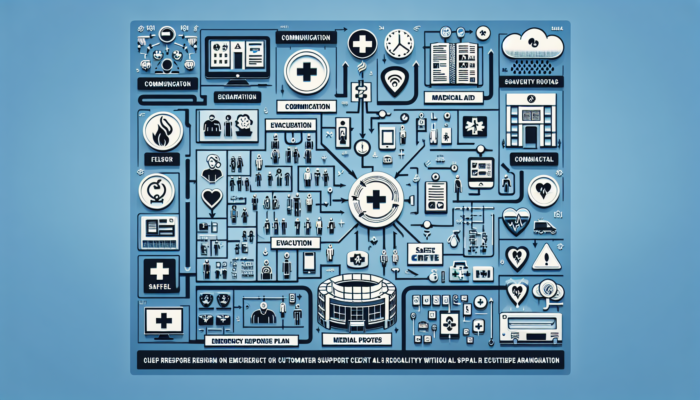
Diagram of emergency response plan for customer support, showing communication, evacuation, medical aid, and safety protocols.

Creating a tailored emergency response management plan that meets the specific needs of your organisation is crucial. While the details may differ by industry, the following components are vital for effective emergency response in customer support:

1. Conducting Comprehensive Risk Assessment and Analysis

To develop a thorough emergency response management plan, it is essential to first identify potential risks and vulnerabilities that could adversely affect your customer support operations. This analysis should encompass internal factors such as technological failures and staffing shortages, alongside external threats like natural disasters and cyber vulnerabilities. Conducting a detailed risk assessment will enable you to gauge the likelihood and potential impact of each identified risk, allowing for informed decision-making.

2. Providing Extensive Emergency Preparedness Training

Once potential risks have been identified, it is vital to ensure that all members of the customer support team undergo comprehensive training on emergency protocols and procedures. This training should encompass a variety of scenarios, equipping employees with the necessary skills to manage emergencies effectively and confidently. Regular drills and simulations can further reinforce this training, ensuring that all personnel are thoroughly prepared to respond to emergencies with competence.

3. Crafting a Robust Communication Strategy for Emergencies

A customer support center with screens showing communication protocols and updates via email, SMS, and website during an emergency.

Establishing a clear and efficient communication plan is paramount for a successful emergency response within customer support. This strategy should delineate protocols for informing customers about service interruptions, providing timely updates on the situation, and directing them to alternative support options if necessary. Utilising multiple communication channels, such as email, social media, and website notifications, is crucial for effectively reaching customers and ensuring they remain informed throughout the crisis.

4. Establishing Redundancy and Backup Systems for Operational Continuity

Incorporating redundancy measures and backup systems is essential to guarantee that customer support operations can continue seamlessly, even in the face of infrastructure failures or other disruptions. Consider investing in backup power sources, redundant network connections, and cloud-based customer support platforms. Regular testing and updates of these systems will ensure they remain effective and reliable, providing peace of mind during emergencies.

5. Promoting Cross-Training and Strategic Resource Allocation

Encouraging cross-training among customer support personnel is vital for enhancing flexibility and responsiveness during emergencies. By broadening individual skill sets, employees can manage various tasks and responsibilities as required, ensuring that no critical area is neglected. Moreover, strategically allocating resources will empower the team to effectively address urgent areas or high-priority customer inquiries during emergency situations, optimising overall response efforts.

6. Implementing a Formal Incident Reporting and Analysis Framework

A flowchart on a digital screen showing steps of incident reporting and analysis in a modern office.

Creating a formalised process for documenting and analysing incidents that occur during emergencies is essential. This practice enables businesses to pinpoint areas that require improvement, assess the effectiveness of their response strategies, and implement necessary adjustments for future incidents. Regularly reviewing and updating the emergency response plan based on these evaluations is crucial for ongoing enhancement and refinement of the plan.

Adopting Best Practices for Superior Emergency Response Management

To bolster the effectiveness of your emergency response management initiatives, consider integrating the following best practices:

  • Conduct Regular Reviews and Updates of the Response Plan: Periodically evaluate and revise your emergency response plan to reflect advancements in technology, personnel changes, or updates in operational processes. Keeping the plan current ensures that all employees are well-acquainted with the latest protocols and procedures.
  • Fostering Collaboration and Coordination Across Departments: Encourage robust collaboration between customer support and other organisational departments. Coordinating efforts ensures a cohesive response during emergencies and facilitates the sharing of valuable insights and information that can improve overall efficiency.
  • Promoting Ongoing Training and Development Initiatives: Advocate for continuous training and education for customer support team members. Staying informed about emerging risks, industry trends, and best practices in emergency response management enables businesses to adapt their plans as necessary and remain resilient in the face of challenges.
  • Building Strategic External Partnerships: Establish partnerships or collaborations with external organisations that specialise in emergency response management. Their expertise, resources, and support during crises can significantly enhance your overall response capabilities and provide additional layers of security.
  • Conducting Regular Testing and Drills: Implement routine drills and simulations to evaluate the effectiveness of your emergency response plan. These exercises help to identify potential gaps or weaknesses and provide opportunities for necessary adjustments and improvements to ensure readiness.

The Significance of Emergency Preparedness in Customer Support Operations

In the realm of customer support, maintaining preparedness for emergencies is a fundamental aspect of ensuring operational continuity, preserving customer satisfaction, and safeguarding your business’s reputation. By implementing a comprehensive emergency response management plan that encompasses risk assessment, training, communication strategies, and redundancy systems, businesses can effectively navigate any crisis while delivering exceptional support to their customers, even during challenging times. It is vital to recognise that preparation is key, and investing in emergency response management translates to investing in the resilience and long-term success of your organisation.

1. Why is emergency response management crucial for customer support?
Emergency response management is essential in customer support as it enables businesses to maintain customer trust, minimise downtime, and prioritise employee safety and well-being. By adequately preparing for emergencies, businesses can instil confidence in their customers, swiftly and effectively address inquiries and issues, and ensure the safety of their customer support teams during crises.

2. What are the fundamental components of an emergency response management plan in customer support?
The essential components of an emergency response management plan in customer support include:

  • Risk assessment and analysis to identify potential risks and vulnerabilities
  • Emergency preparedness training to equip customer support teams with the necessary skills
  • Communication plan for informing customers and providing timely updates
  • Redundancy and backup systems that ensure continuous operations even during emergencies

3. What are the best practices for emergency response management within customer support?
The best practices for emergency response management in customer support include:

  • Regularly reviewing and updating the emergency response plan to ensure it remains relevant and effective
  • Encouraging collaboration and coordination across departments to enhance response efforts
  • Promoting continuous training and education for customer support teams to stay prepared
  • Establishing partnerships with external organisations to gain additional support and expertise
  • Conducting regular testing and drills to identify potential gaps or weaknesses in the plan

4. Why is continuous training and education essential in emergency response management?
Continuous training and education are critical in emergency response management as they empower customer support teams with updated knowledge about emerging risks, industry trends, and best practices. By remaining informed and well-trained, businesses can adapt their emergency response plans effectively, enhancing their overall readiness and response capabilities during emergencies.

Originally posted 2023-04-22 09:52:13.

The post Emergency Response Management: Customer Support On Standby appeared first on Healthcare Marketing Service.

Categories
Customer Support Finance & Business

CRM Training for Continuous Support and Effective Utilisation

Customer Relationship Management (CRM) software has quickly transformed into a vital resource for businesses around the world. By efficiently organising and managing customer data, CRM systems enable companies to streamline their operations, enhance customer satisfaction, and significantly drive revenue growth. However, to truly unlock the full potential of CRM, it is essential to engage in effective usage and continuous support, which can be achieved through comprehensive CRM training programmes. This article will explore the essential significance of CRM training, its numerous advantages, and provide actionable recommendations for successful implementation.

Discover the Essential Importance of CRM Training for Your Business Success

Implementing a CRM system without sufficient training can lead to considerable underutilisation, frustrated users, and missed opportunities. CRM training plays a crucial role in ensuring that employees understand how to leverage the software’s full capabilities, which empowers them to perform their tasks efficiently and effectively. Here are several compelling reasons why investing in CRM training is not merely advantageous, but absolutely essential:

  1. Maximise Efficiency Through Comprehensive CRM Training: Through detailed CRM training, employees acquire a profound understanding of the system’s features and functionalities. This thorough knowledge allows them to navigate the software with ease, automate repetitive tasks, and optimise their workflows. By utilising the CRM system proficiently, teams can save considerable time, minimise the risk of manual errors, and concentrate on high-value activities such as nurturing customer relationships and closing sales.

  2. Elevate Productivity Using Advanced CRM Features: CRM training empowers employees by improving their ability to harness advanced features and tools that can significantly boost productivity. From contact management to lead tracking, training equips users with the skills necessary to maximise their output. By exploiting the system’s capabilities, employees can swiftly access crucial information, establish task priorities, and collaborate effectively, resulting in heightened productivity throughout the entire organisation.

  3. Enhance Data Quality for Informed Decision-Making: Accurate and up-to-date data is the foundation of any effective CRM system. Inadequate training can lead to inconsistent data entry, duplicate records, and incomplete information, which can undermine the effectiveness of the CRM system. Training ensures that employees learn best practices for data entry, data cleansing techniques, and comprehensive data management strategies. This guarantees that the CRM database remains clean, reliable, and capable of providing valuable insights that inform decision-making.

  4. Foster Increased User Adoption Through Effective Training: Resistance to change often presents a significant challenge during the implementation of new software. However, effective training programmes can help mitigate this resistance by familiarising employees with the benefits and functionalities of the CRM system. By offering hands-on training and addressing user concerns, organisations can greatly enhance user adoption rates and encourage employees to incorporate the CRM software into their daily workflows.

Unveiling the Extensive Benefits of Comprehensive CRM Training

A diverse group of professionals in a modern conference room engaging with CRM software on laptops and screens during training.

Robust CRM training programmes provide a multitude of advantages for both individuals and organisations. Let’s delve into some of the most significant benefits that effective CRM training can deliver:

  1. Empowered Users Leading to Increased Engagement: Training equips users with the essential knowledge and skills needed to fully leverage the capabilities of the CRM software. By empowering employees, organisations foster a culture of self-sufficiency and encourage users to take ownership of their CRM experience. Empowered users are significantly more likely to explore the system’s features, experiment with new functionalities, and discover innovative strategies to drive business growth.

  2. Enhanced Customer Experience Through Personalised Interactions: CRM training focuses not only on system functionalities but also emphasises customer-centric strategies. By understanding how to utilise the CRM system to its fullest extent, employees can personalise interactions, anticipate customer needs, and deliver exceptional customer experiences. This approach leads to increased customer satisfaction, improved loyalty, and ultimately, substantial business success.

  3. Informed Decision-Making Driven by Data Insights: CRM systems generate a wealth of data, and training empowers employees to extract actionable insights from this information. By learning how to create and interpret reports, dashboards, and analytics, users can make informed decisions based on accurate and timely data. This data-driven decision-making approach facilitates strategic planning, identifies sales trends, and drives significant revenue growth.

  4. Commitment to Continuous Improvement in Training: CRM training should not be a singular event but an ongoing process. Regular refresher courses, advanced training sessions, and continuous learning opportunities ensure that users stay up-to-date with the latest CRM features and industry best practices. By fostering a culture of continuous improvement, organisations can adapt to evolving business needs, maintain competitiveness, and achieve long-term success.

Effective Strategies for Implementing Successful CRM Training Programs

To ensure the success of CRM training initiatives, organisations must adopt a structured approach. Here are several effective strategies for implementing successful CRM training programmes:

  1. Conduct a Thorough Assessment of Training Needs: Before developing a training programme, it is crucial to carry out a comprehensive evaluation of your employees’ skill levels, knowledge gaps, and specific training requirements. This assessment will help tailor the training content to effectively address both individual and team needs. Consider using surveys, interviews, or skills evaluations to gather valuable insights.

  2. Tailor Training Content to Align with Your CRM System: Develop training materials that correspond with your organisation’s CRM system and business processes. Customise the content to reflect your unique workflows, terminology, and industry specifications. This ensures that employees can relate to the training material and apply it directly in their daily tasks. Incorporate real-life examples and case studies that resonate with your employees’ roles and responsibilities.

  3. Incorporate Hands-On Experience for Practical Learning: Simply teaching theory is insufficient for effective CRM training. Integrate hands-on exercises, simulations, and real-life scenarios to help users gain practical experience and build confidence in using the CRM software. This practical learning approach accelerates the educational process and ensures a smooth transition to utilising the CRM system. Consider providing sandbox environments or practice modules where employees can experiment and apply their newly acquired skills.

  4. Establish Ongoing Support Structures for Users: Training should extend beyond the completion of a programme. Create a support system that offers continuous assistance, post-training resources, and access to knowledgeable helpdesks. This ensures that users have a reliable source of support when they encounter challenges or require clarification after the training sessions. Consider developing an internal knowledge base, hosting regular Q&A sessions, or assigning CRM champions within each team to provide ongoing support.

  5. Regularly Monitor and Evaluate Training Effectiveness: Continuously assess the effectiveness of your CRM training programmes through feedback surveys, assessments, and performance metrics. Use this feedback to enhance the training content, delivery methods, and overall training experience. A flexible approach allows organisations to adapt their training programmes to evolving user needs and changing CRM requirements. Solicit feedback from trainees, conduct post-training assessments, and analyse user adoption and engagement data to gauge the impact of your training initiatives.

Unlocking Business Growth Through Strategic CRM Training

CRM training serves as a cornerstone in the successful implementation and ongoing support of CRM systems. By investing in comprehensive training programmes, organisations can unlock the full potential of their CRM software, optimise efficiency, enhance productivity, and deliver exceptional customer experiences. It is essential to tailor the training to your organisation’s unique needs, provide practical experience, offer continuous support, and consistently evaluate and improve your training programmes. With the right training, your employees will evolve into proficient CRM users, driving significant business growth and success.

Note: The complete article will be published online in markdown format.

Frequently Asked Questions About CRM Training

Employees in a CRM training session using laptops, engaging with a dynamic CRM interface for enhanced productivity and personalized customer interactions.

Q1: Why is CRM training important?

A1: CRM training is essential as it equips employees with the necessary knowledge and skills to effectively utilise the CRM system, resulting in optimised efficiency, enhanced productivity, improved data quality, and increased user adoption.

Q2: What are the benefits of CRM training?

A2: The benefits of CRM training encompass empowering users to leverage the full potential of the CRM software, enhancing customer experiences through personalised interactions, facilitating informed decision-making driven by data insights, and fostering continuous improvement through ongoing learning opportunities.

Q3: How can organisations implement successful CRM training programmes?

A3: Organisations can successfully implement CRM training programmes by conducting a thorough assessment of training needs, customising training content to align with their CRM system and business processes, providing hands-on experiences through practical exercises, and offering ongoing support and resources. Moreover, monitoring and evaluating the effectiveness of training programmes is crucial for continuous enhancement.

Q4: What is the role of CRM training in driving business growth and success?

A4: CRM training is pivotal for driving business growth and success by unlocking the full potential of the CRM software, optimising efficiency, improving productivity, and delivering exceptional customer experiences. With proficient CRM users, organisations can achieve their objectives and maintain competitiveness in the market.

Originally posted 2024-04-15 05:19:59.

The post CRM Training for Effective Utilisation and Continuous Support appeared first on Healthcare Marketing Service.